This is the second blog in my series exploring how development can be reimagined, inspired by the Alternative Convos podcasts by Charles Kojo Vandyck, where activists and practitioners challenge long-standing development narratives in Africa. In the first blog, I reflected on why returning to the roots of development by centering humanity, culture, and people is essential.
In this piece, I turn to another foundational assumption in development, the idea of community. It is one of the most frequently used terms, yet rarely questioned. What do we actually mean when we speak about the community? And what does it take to shift power to the community?
This piece is drawn from the perspectives of Sarah Pachuto from the Ugandan National NGO Forum, Berhanu Demissie of the Development Expertise Center, and Jim Chick Fomunjong of the West Africa Civil Society Institute. As civil society faces growing pressures globally, revisiting how development should recognize and support people’s agency is both necessary and urgent.
Letting Communities Define Themselves
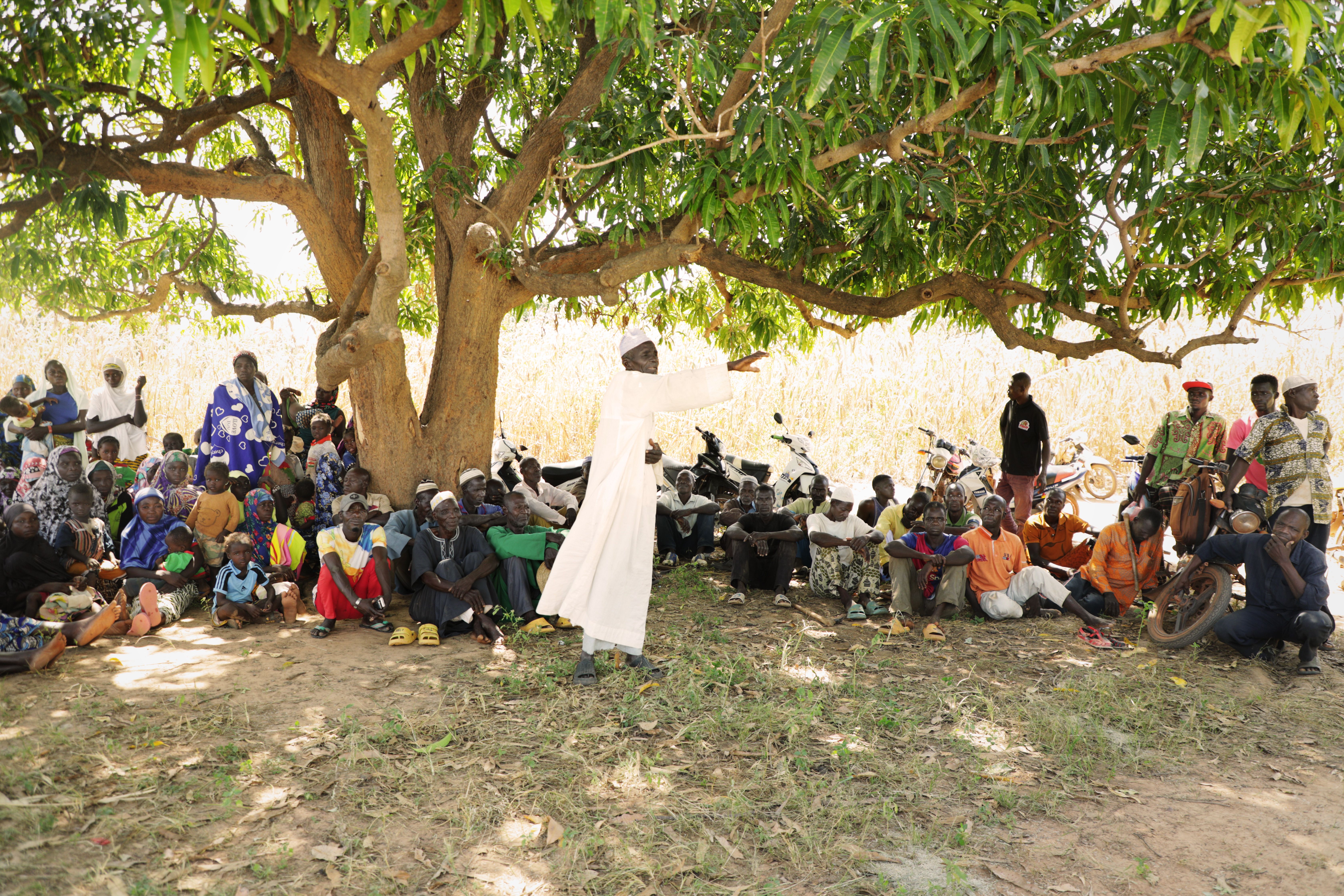
Development practice often treats communities as fixed entities, defined by geography, vulnerability, or a shared problem to be solved. Yet this framing rarely reflects how people actually organize their lives. Communities are fluid and layered, shaped by relationships, identities, and lived realities.
Within what is often labeled a single community, multiple self-interest groups already exist. Berhanu Demissie highlights how young people, for example, organize around sports, music, or shared causes, creating spaces of leadership and collective energy. These groupings demonstrate agency, but they do not represent the entirety of community life.
Communities also come together around shared purpose and the desire to contribute to society. Sarah Pachuto reminds us that groups organized around service or influence, such as Rotary or Lions Clubs, are communities in their own right. What matters is not how development categorizes them, but whether people can define themselves and decide how, or if, they want to organize for change.
Rather than rushing to define communities for programmatic convenience, development actors need to listen carefully to how people understand their own needs, identities, and aspirations, and the kinds of collective action they wish to pursue. Jim Chick Fomunjong urges pause and critical reflection on the words we use, as a way to move closer to people’s lived realities.
Where Is the Actual Power?
Too often, development assumes power resides elsewhere and must be transferred to people. Yet power already exists within communities, embedded in relationships, knowledge, coping strategies, and collective action. At the same time, power within communities is not evenly distributed and can be concentrated in the hands of a few.
Sarah Pachuto raises an important question: who defines power, and why do we assume communities do not have it? Shifting power, she argues, is shifting the spotlight toward whose realities are centered and whose knowledge is acknowledged. Too often, development highlights externally defined success without asking communities how they understand change or whether it aligns with their priorities.
The COVID-19 response illustrated this clearly. Grassroots groups mobilized quickly and effectively because they understood local contexts in ways outsiders could not. Their effectiveness came from proximity and lived experiences, and not from formal authority.
When different groups come together voluntarily around common concerns, their collective voice can grow stronger. Berhanu Demissie emphasizes the importance of connecting different self-interest groups and networks in ways that reflect shared needs. Power, in this sense, is not about elevating a single leadership structure, but about enabling communities to articulate and act on what matters most to them.
A Needed Reset
As development has become increasingly professionalized, it has often distanced itself from indigenous knowledge and lived experiences. For instance, technical tools, logframes, and indicators risk overshadowing the everyday wisdom people use to navigate complex realities and define change. Sarah Pachuto cautions that in professionalizing the sector, development may have sidelined what really matters to the people we work with.
This raises a question echoed by Berhanu Demissie: What value are development actors actually adding? The focus should be on value before money, and on whether interventions respond to realities identified by communities themselves.
This also calls for a shift in mindset. For Jim Chick Fomunjong, the challenge is not incremental adjustment, but a deeper reset. Without humility and a willingness to step back, locally oriented development risks becoming a slogan rather than a practice. A reset means observing how communities organize, questioning assumptions about representation, and measuring change based on what people say has shifted in their lives, not only what frameworks anticipate.
Reflection
From these conversations, rethinking community and power requires more than just changing terminology. It requires attentiveness to real needs, uneven power relations, and the right of communities to define themselves and choose how they engage. Communities are not uniform, and power does not automatically become equitable simply because action is described as local or community-based. Within any community, some voices are more visible and influential than others, while some remain marginalized even at the local level. Marginalized communities, self-organized groups, and communities formed around shared interests or influence all exist, but it is important to define the community and interventions with the people for whom it matters the most.
-Soni is a Development Consultant based in Denmark, working with social enterprises and non-profits across South Asia, Africa, and Europe. She is also the #ShiftThePower Fellow (2023/24).